
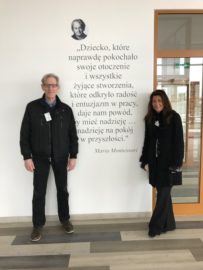
 I was asked to lead a three-day Montessori Leadership Seminar with Dr. Paul Epstein, sponsored by the Polish Montessori Institute in March. Before beginning the seminar, I had the opportunity to tour the city and visit several Montessori schools. My observations were that Poland was a fascinating mix of the old and new. Since freeing themselves from communist rule in 1989, they have emerged as a modern, creative and entrepreneurial force in all areas of growth. Their cities have been rebuilt and areas like the old town, which used to have only one restaurant under the communist regime, is now blooming with all types of innovative cuisines.
Their emphasis on food was fresh and sustainable with an influx of cuisines from around the world. In a formerly old factory building, now stands an improved and newly renovated building that houses a sushi restaurant, a beer garden, a place to enjoy French crepes, delicious fine dining, Polish traditional fare, and even a tea market. The culture definitely appreciates fine food and beverages.
Before presenting five individual sessions at the 3-day Montessori seminar, I had the amazing opportunity to visit Montessori schools in the area and was surprised by all of them. Some were brand new, modern, and chic while some updated older spaces to look brand new. One looked like a traditional “forest” school. They are all experiencing growth in their programs and wanted advice on rapid expansion. My experience in Montessori education and the rapid growth experienced at Five Oaks Academy made me a great resource to exchange ideas and answer many excellent questions.
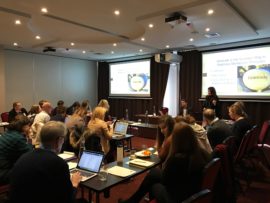 As an SCMA Board Member, I have also seen the same type of growth explosion in my own state in Montessori education. South Carolina currently holds the lead in Montessori schools in the United States. Aside from touring their beautiful facilities, learning about the quality of their educational development, and experiencing their thirst for improving Montessori in Poland… it was a truly heartwarming experience for me. The educators who attended the 3-day Montessori seminar were anxious to learn practical details about running a school as well as new best practices for a Montessori school. I enjoyed giving presentations on brain research and the connections between resilience, grit, happiness, and gratitude and how that can improve learning and school guidance. I received such positive feedback throughout my three days of teaching; it leaves me with thoughts of wanting to return to Poland to share more.
It’s rare that I get the chance to consult with a group of people who are so thoroughly committed to Montessori. The group I consulted with shared stories of grit and perseverance that allowed them to break through many obstacles when attempting to make Montessori education more readily available for the students of Poland.
I am fortunate to have met such a resilient and grateful group of educators who have defined “True Grit” as they advance Montessori education in their developing country.
Peace,
Kathleen Trewhella-Grant, Executive Direc
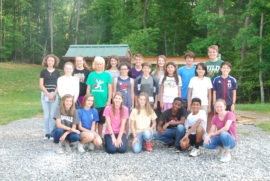
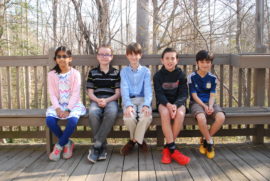
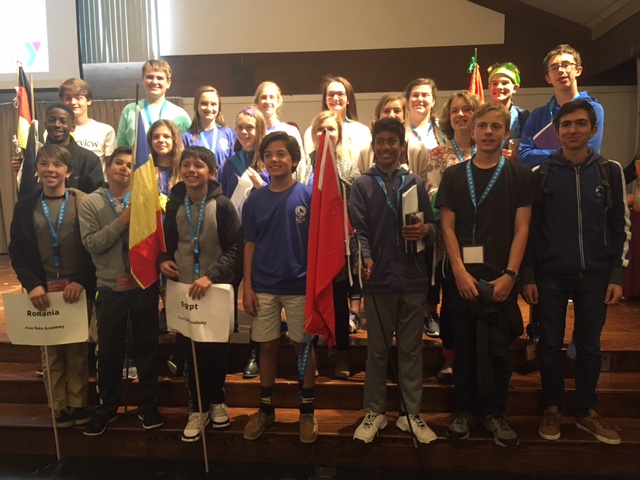 This year our Five Oaks Middle School Model United Nations group included 24 middle school participants, the largest number to have taken part from Five Oaks yet. These 24 students represented 10 countries and each group researched their country’s culture, celebrations, government, currency and other important details. Using these details, they created display boards and selected an issue their country faced and wrote a paper detailing the issue along with an in-depth solution to that specific problem.
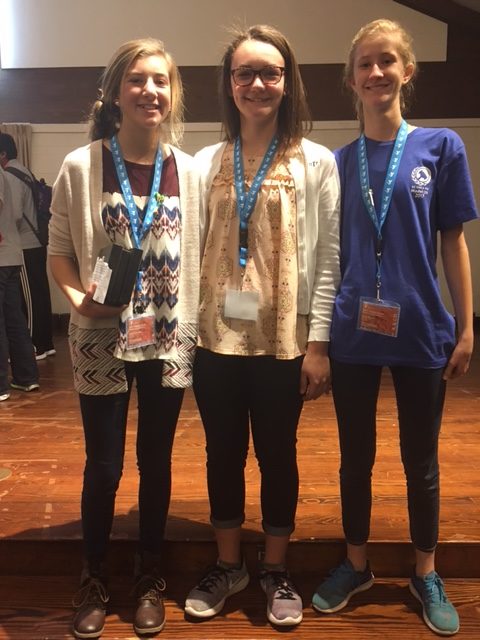 These months of work each year culminate in a two-day conference where students present their ideas to rooms of peers for debate and discussion. Groups who are ranked highly by their peers in terms of being prepared, presenting debatable and effective solutions and speaking well, progress to speak in front of larger groups of students in General Assembly or Plenary. In General Assembly, two sessions are held simultaneously and all students in attendance are sorted into one of the groups to hear certain proposals again and debate them in this larger setting. In Plenary, all students attend a single session and hear a few of the groups present and debate their topics in front of the whole convention. Each time that students debate their proposals, the groups they present to vote to pass or deny the resolution. Of the Plenary groups that pass, they get one additional opportunity to share their issue and solution and those few final proposals are ranked in order of importance.
 Typically one group is selected as having the issue of the greatest importance and possible solution and that group receives a $500 donation to a charity of their choosing related to the topic they researched so thoroughly. This year, two groups were selected and both were from Five Oaks! Bangladesh, represented by Emily Meade, Brigitte Pinochet, and Grace Ireland was one of those groups and they spoke on the issue of rampant malnutrition in their country. Ethiopia was the other group that took this top honor and was represented by Ranjan Jindal, Jefferson Summers and Gabrielle McGraw speaking on the topic of research-based effective farming practices.
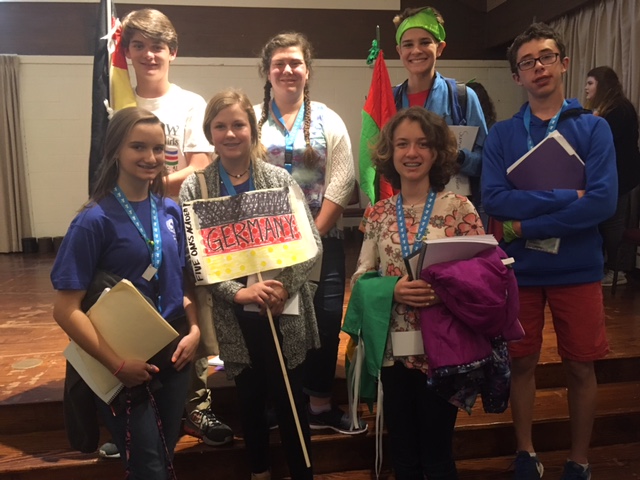
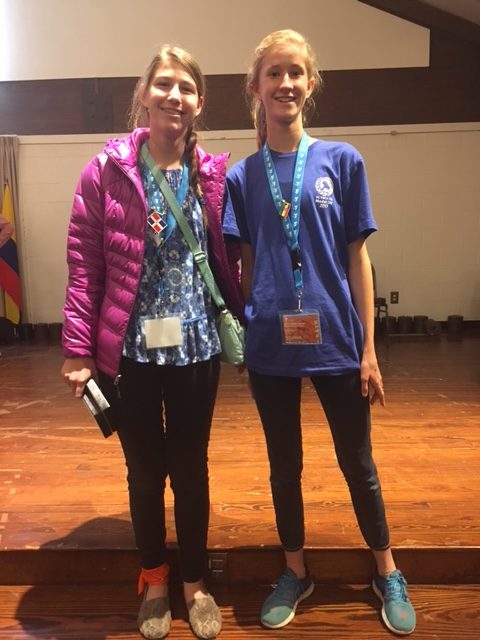 The group representing Bangladesh also received an award for “Outstanding Proposal” which is awarded by a panel of community members who assess the proposals prior to conference time with all student names and school identifying markers removed. Aside from the groups who made it to Plenary, three other Five Oaks groups made it to General Assembly and they were Burkina Faso (represented by Ariella Alfieri, Smith Summers, and Ben VanPelt), Brazil (represented by Caitlyn White and Ariana Alexiou) and Germany (represented by Laney McKinney, Hal Freeland, and Brooke Garrett).
 Five Oaks Academy is pleased to announce that we are participating in the 3rd Annual iMAGINE Upstate STEAM Festival on April 1 from 11:00 am – 5:00 pm in Greenville’s beautiful West End. This is a free event and open to all ages!
 As we prepare our students for the jobs of tomorrow, we are keenly aware of the uncertain and quickly-changing landscape of the workplace. We are tasked with preparing children with the skills necessary for jobs that might not even exist yet. When evaluating current research, it is now apparent that good grades don’t always equal success in the 21st-century workforce. It is now evident that “grit” is the largest indicator for success when looking at the long-term outlook of a person. Grit is defined as a non-cognitive trait based on an individual’s passion for a particular long-term goal or end state, coupled with a powerful motivation to achieve their respective objective. Simply put, grit is the amount of perseverance a person demonstrates; the willingness to fail and start over again.
 by creating an environment that embraces failure as a means to success. Through guidance, students learn to step back and reflect on their failures. They start to ask questions like “Why did this not go the way I wanted it to?” and “What can I do differently next time”? We allow our students to have successful failures by viewing failure not as a negative but as a positive, as learning. Being able to reflect and learn from one’s failures allows students to grow in their understanding of themselves as well as their abilities to problem solve and persevere.
 Many very successful people like Steven Spielberg, Michael Jordan, JK Rowlins failed many, many times before becoming who they are today. At Five Oaks Academy, we provide an environment that supports and gives students may opportunities to develop their “true grit”.
 Dr. Dorer’s day began with a “Coffee and Montessori” event where he met with parents to discuss his article, “Ten Essential Montessori Principles (…plus one)”. Because Montessori is so different from what most people experienced during their schooling, many times it is hard to put into words exactly what it is (or is not). In his recent article, Dr. Dorer articulates ten essential principles of a Montessori program; respect, creativity, freedom of movement, freedom to choose, freedom to repeat, independence, mixed ages, holism, prepared environment, and planes of development (development occurring in distinct phases or levels) and why they are important to the Montessori philosophy. To read this article by Dr. Dorer, please view the January 2017 issue of Tomorrow’s Child Magazine,
  To finish out his visit, Dr. Dorer met with the entire faculty and gave a presentation based on his new book,
 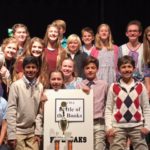 Congratulations to the 2016-17 Middle School Battle of the Books team for tying for first place in the SCISA State competition on November 30, 2016. The team, comprised of 18 students, began reading books in May to prepare for the Regional competition that was held on Nov. 9, 2016. This activity is completely managed by the students including; planning who reads which of the 20 books, running practices, and deciding who is onstage to answer questions each round. They were confident and showed great maturity when challenging the judges’ decisions on incorrect answers. We are so proud of the team and this impressive feat!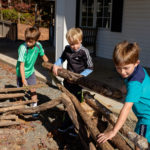
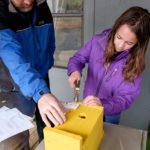 FedEx Day is an event the Middle School students look forward to all year. This is a day that they take on a project of their choosing with the goal of “delivering it quickly” just as FedEx does. Students plan their projects in advance but have to complete the projects in a single day. The following day they present it to the class.
 On Dec. 12, students got busy executing their Fed Ex Day plans. There were several parent volunteers available to assist the students in creating their projects. Problem-solving, critical thinking, and creative thinking are all skills that are used on this exciting day. These important skills are also embedded in the Middle School program every day as we strive to cultivate original thinkers. Many times, students learn as much or more from their errors then they do from their successes throughout this fun and innovative day.